29 Dec, 2025
 4 mins read

A sideways market is a phase in the stock market when prices do not move clearly upwards or downwards but fluctuate within a narrow range. Also known as a horizontal or range-bound market, this period can last for days, weeks, or even months. In this blog, we will explore what a sideways market is, why it happens, its features, trading strategies, and the potential benefits and risks involved.
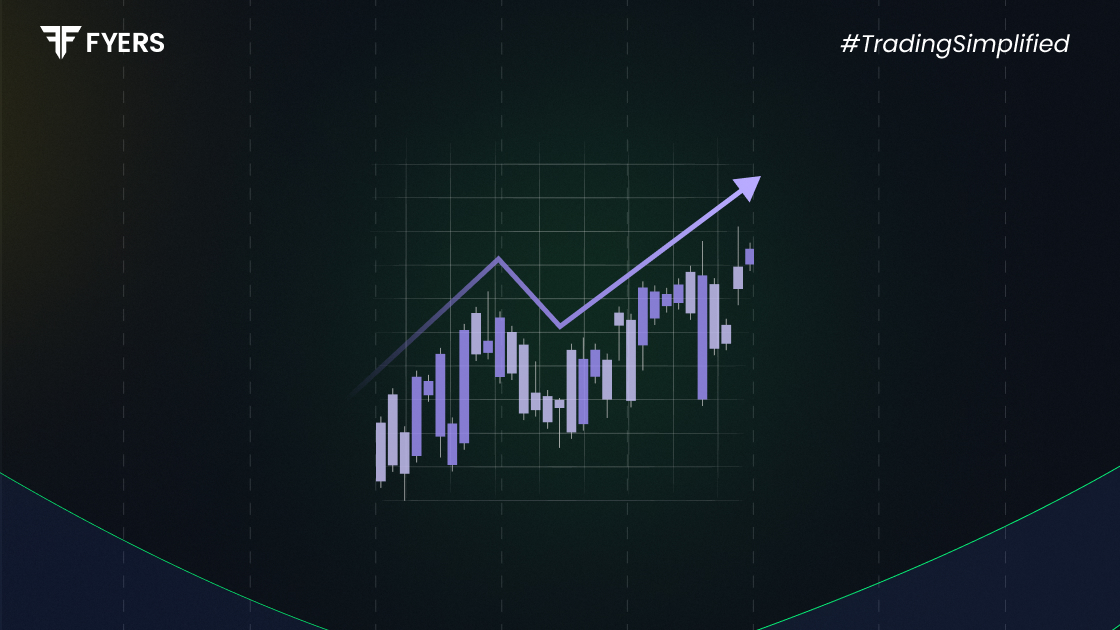
A sideways market occurs when the price of a security or market index moves within a horizontal range without forming a clear trend. In other words, prices go up and down within a set level but fail to break out either way.
For example, if a stock trades between ₹900 and ₹950 for a few weeks, it is considered to be in a sideways market. There is no strong buying or selling pressure, and both bulls and bears appear indecisive.
Sideways markets are typically seen after a strong upward or downward trend when the market takes a pause.
Several factors can lead to a sideways market:
Market Uncertainty: When investors are unsure about economic conditions, interest rates, or political events, they avoid taking strong positions.
Profit Booking: After a rally, investors may start booking profits, preventing further upward movement.
Lack of News or Triggers: In the absence of major developments, markets tend to move sideways.
Consolidation Phase: Companies or sectors may consolidate after strong growth, leading to flat market movement.
A sideways market reflects balance between supply and demand. Neither buyers nor sellers have full control.
Here are the key features that define a sideways market:
Range-Bound Prices: Prices fluctuate between fixed support and resistance levels.
Low Volatility: Compared to trending markets, sideways markets often show lower price swings.
Reduced Volume: Trading volume may decline as investor interest fades.
Frequent Reversals: Prices change direction often, bouncing between the upper and lower boundaries.
No Clear Trend Lines: There’s no upward or downward slope in price charts.
Identifying these traits helps traders adjust their strategies accordingly.
Trading in a sideways market requires a different approach from trend trading. Here are some popular methods:
Range Trading
Traders buy near support and sell near resistance. This strategy assumes the price will continue bouncing within a range.
Use of Technical Indicators
Oscillators like RSI (Relative Strength Index) and Stochastic are useful in sideways markets. They help spot overbought and oversold levels.
Short-Term Trading
Since long-term trends are absent, traders often shift to short-term positions to capture small gains.
Avoid Breakouts Until Confirmed
False breakouts are common. Wait for strong confirmation before trading a breakout.
Options Strategies
Neutral strategies like iron condors or straddles can help profit from limited price movement.
Risk management is crucial, as false signals are more frequent during these phases.
While sideways markets may seem dull, they offer some advantages:
Opportunities for Range Traders: Price predictability within a range can lead to small but consistent profits.
Time for Analysis: It gives investors time to assess fundamentals before the next trend begins.
Lower Risk in Some Strategies: Short-term strategies can be less risky if the range is stable.
Entry Points for Long-Term Investors: Accumulating shares at support levels can be a good strategy for long-term positions.
There are several risks associated with sideways markets:
False Breakouts: Prices may temporarily move out of the range and then reverse, leading to losses.
Low Momentum: Lack of strong trends makes it hard to hold winning trades.
Overtrading: In an attempt to find opportunities, traders may place too many trades and incur high transaction costs.
Emotional Frustration: The absence of strong trends can lead to impatience or poor decision-making.
Being aware of these risks helps traders remain cautious and disciplined.
A sideways market is a natural part of the market cycle. It signals a phase of indecision and consolidation, often paving the way for a new trend. Understanding its characteristics allows investors and traders to adapt their strategies.
While sideways markets may lack excitement, they offer chances for disciplined traders to benefit from short-term price swings. Patience, technical tools, and risk control are key to navigating this market phase successfully.
It is a market where prices move up and down within a fixed range, without going strongly up or down.
It depends. It may be challenging for trend-followers but can be profitable for range-bound traders.
It can last for a few days to several months, depending on market conditions and investor sentiment.
Yes. Strategies like straddles, strangles, and iron condors are designed for markets with limited price movement.


Calculate your Net P&L after deducting all the charges like Tax, Brokerage, etc.

Find your required margin.

Calculate the average price you paid for a stock and determine your total cost.

Estimate your investment growth. Calculate potential returns on one-time investments.

Forecast your investment returns. Understand potential growth with regular contributions.

You have successfully submitted your partnership request form. You will be hearing us soon!






 Back
Back