



In line with the SEBI circular issued in October 2017, regarding categorization and rationalization of Mutual Fund Schemes, SEBI issued new guidelines for asset allocation of multi cap funds. They stand as follows:
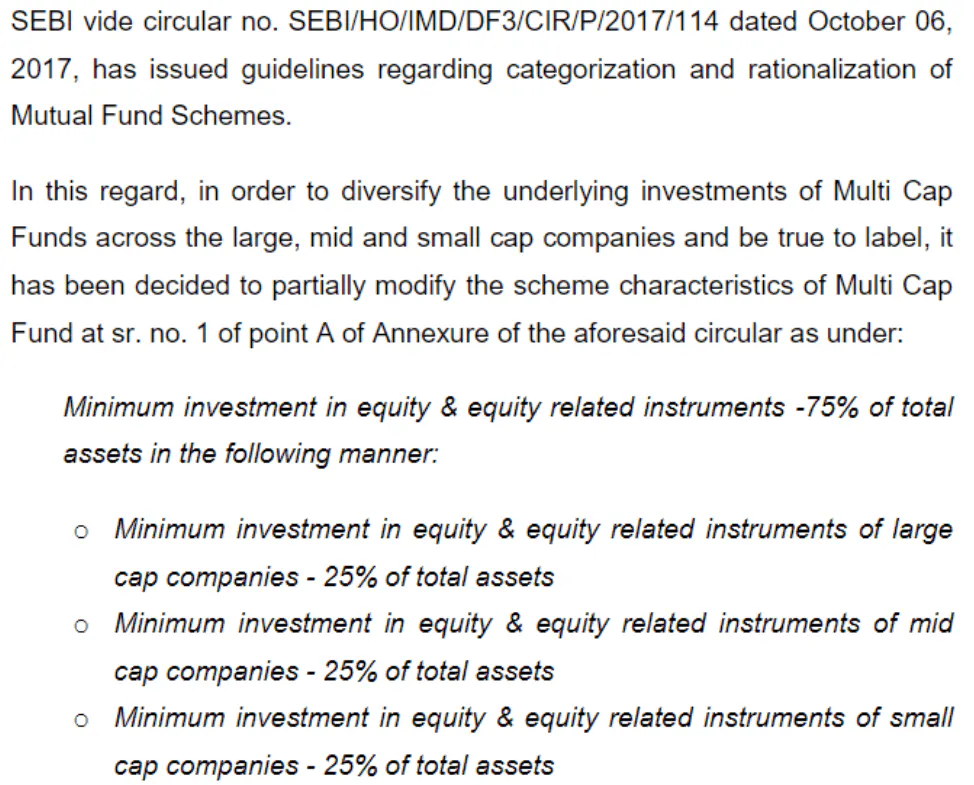
All the existing Multi Cap Funds shall ensure compliance with the above provisions within one month from the date of publishing the next list of stocks by AMFI, i.e. January 2021. In lieu of the changes, the probable effect can be seen on the 35 mutual fund schemes categorized as multicap funds.
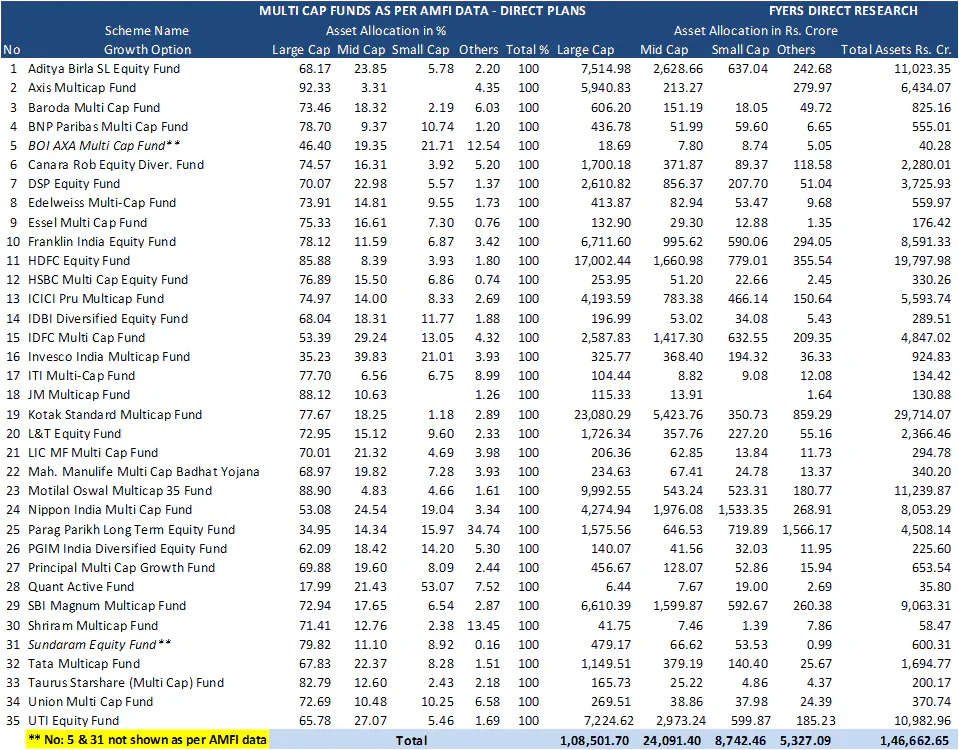
Total assets under multi cap universe stand at Rs.1,46,662 crore, with an average of 69.17% as average asset allocation for largecap stocks, 16.88% for midcaps and a meager 9.92% for smallcaps. This allocation will undergo a significant change as largecap allocation has to reduce by a notable percentage and the fund flows into midcap has to increase at least by Rs.12.575 crore and into small caps by a good Rs.28,000 crore.
Based on AMFI’s list of stocks by end of December 2020, multicap fund managers have to ensure compliance within one month of the date of the updated list i.e. by January 2021. As and when fund managers start implementing these new regulations:
The changes implemented by fund managers could result in confusion for retail investors, as they might not be sure of which mutual fund scheme to remain invested in and which ones to be sold. This is bound to impact the fund flows, including regular SIP contributions.
Lastly, the implementation of this circular coincides with the Union Budget 2021 presentation. Any disappointments in the union budget will increase the volatility and amplify any negative movements in the stock market.
However, based on the clarification provided by SEBI again, fund managers have quite a few options to enforce before the deadline, including merger of multicap scheme with their existing large cap mutual fund. Investors need to track their multi cap schemes for any possible changes in asset allocation, market cap changes to portfolio etc.
Rgds
Gvk.
